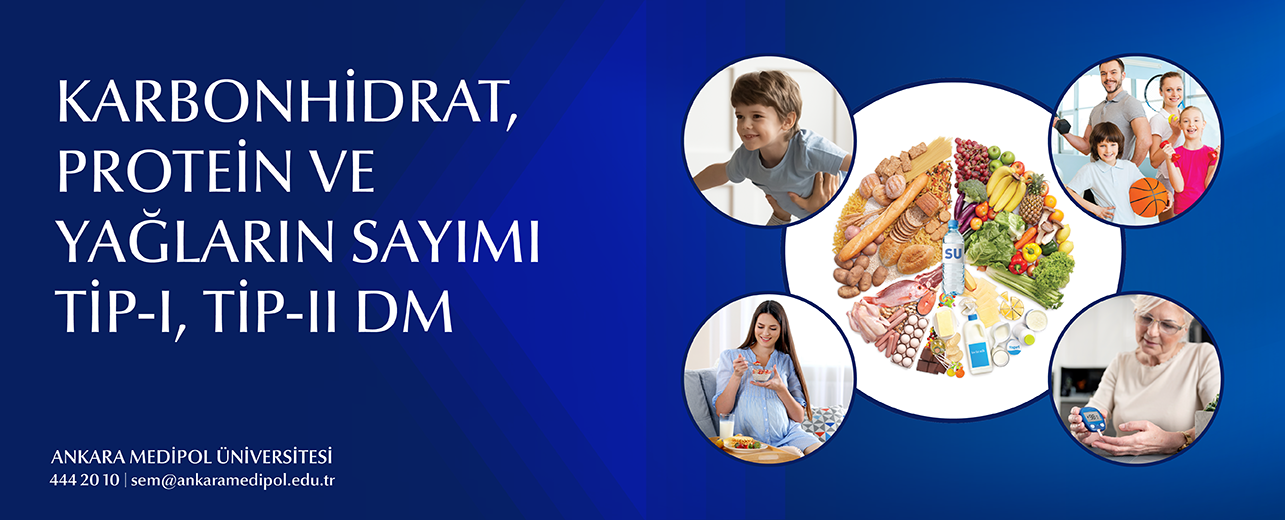
Carbohydrate, Protein and Fat Counting Training
Training Content
1. Pathophysiology of diabetes and current medical treatments
2. Glycemic control and monitoring in diabetes
3. Insulin therapy and administration
4. Insulin pump therapy and use
5. Treatment of hypoglycemia and hyperglycemia in diabetes
6. Principles of medical nutrition therapy in diabetes
7. Nutrition-related factors affecting blood glucose levels
8. Nutritional recommendations by age group in diabetes
9. Gestational diabetes and nutrition
9. The role of carbohydrates in diabetes
10. What is carbohydrate counting? Why is it used?
11. What are the basic principles of carbohydrate counting?
12. What is basic-level carbohydrate counting, for whom is it suitable,
and what are the teaching steps?
13. What is intermediate-level carbohydrate counting, for whom is it suitable, and what are the teaching steps?
14. What is advanced-level carbohydrate counting, for whom is it suitable, and what are the teaching steps?
15. What are the methods for calculating the CHO/insulin ratio in advanced carbohydrate counting?
16. Practical applications at different levels of carbohydrate counting
17. Body weight control in carbohydrate counting
18. Fat and protein counting
19. Low-carbohydrate diets and their effects on glycemic control
20. The effect of glycemic index and glycemic load on blood glucose in diabetes
21. Foods and diabetes
22. Diabetes and Exercise
23. Diabulimia
24. Patient experiences with carbohydrate counting
25. The diabetes education nurse's approach to carbohydrate counting
26. The diabetes education psychologist's approach to carbohydrate counting
27. Case presentations on carbohydrate counting (children)
28. Case presentations on carbohydrate counting (adolescents)
29. Case presentations on carbohydrate counting (adults)
30. Case presentations on carbohydrate counting (adults)
31. Presentations on carbohydrate counting (adults with type 2 diabetes using insulin)
32. Case presentations on carbohydrate counting (insulin pump use)
33. Case presentations on carbohydrate counting (pregnancy)
34. Case presentations on carbohydrate counting (athletes)
35. Case presentations on carbohydrate counting (athletes)
Who Is It For?
This course is open to dietitians who have graduated from an undergraduate program in Nutrition and Dietetics, as well as 3rd- and 4th-year students. Places are limited.
What Will You Learn?
- The course will contribute to the professional and personal development of dietitians and provide an environment for them to gain diverse experiences.
- Staff efficiency will be improved by increasing the number of dietitians qualified in carbohydrate, protein and fat counting, a skill currently known to only a limited number of dietitians in the medical nutrition therapy of diabetes.
- Patient and staff satisfaction will be increased.
- Following the training, participants will gain insight into current trends in the medical nutrition therapy of type 1 and type 2 diabetes, as well as added value such as dialogue, tolerance, cooperation and a positive atmosphere in the relationship between dietitians and patients presenting with diabetes.